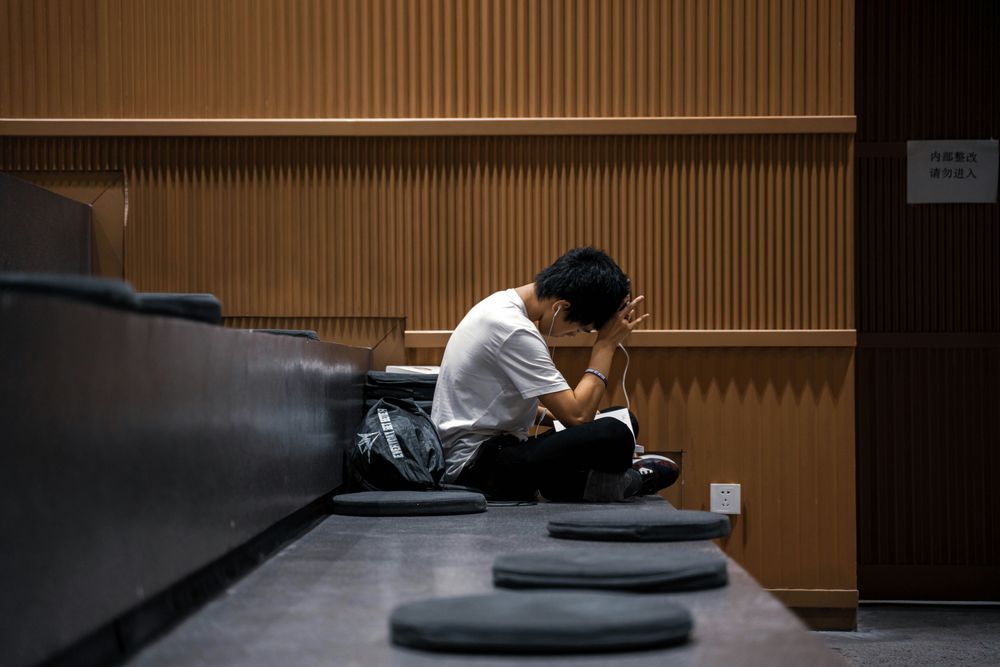
India's students excel academically but struggle silently; nearly 70 percent face anxiety, and over half show depression. Stress, social media, and competition harm mental health, while stigma and lack of support block help. Experts call for normalising mental health and building emotionally resilient youth, India's greatest asset.
In India's race for academic success, one quiet victim stands out: the mental well-being of its youth. The endless pressure to perform, compete, and constantly measure up has left many students battling anxiety, burnout, and depression.
Behind the cheerful posts and perfect selfies on social media lies a stark reality: a generation struggling to stay afloat under mounting expectations.
A study conducted by the Department of Psychology at SRM University AP, Amaravati, and published in the Asian Journal of Psychiatry, has brought to light the growing mental health crisis among India college students.
The findings are stark and deeply concerning. More than two-thirds of the 1,628 students surveyed reported experiencing moderate to high levels of anxiety, while over half exhibited signs of depression. These are not just numbers; they represent an urgent call for awareness, intervention, and systemic support.
The study spanned eight Tier-1 Indian cities: Delhi, Mumbai, Bengaluru, Chennai, Hyderabad, Pune, Ahmedabad, and Kolkata. Participants ranged in age from 18 to 29, with a nearly even gender distribution, 52.9 percent female and 47.1 percent male.
The results paint a troubling picture. Nearly 70 percent of students reported moderate to high levels of anxiety, while around 60 percent showed symptoms of depression. More than 70 percent felt emotionally distressed, and 65 percent struggled to manage their emotions or behaviour. Additionally, 15 percent reported low satisfaction with life, and close to 8 percent rated their overall mental health as poor.